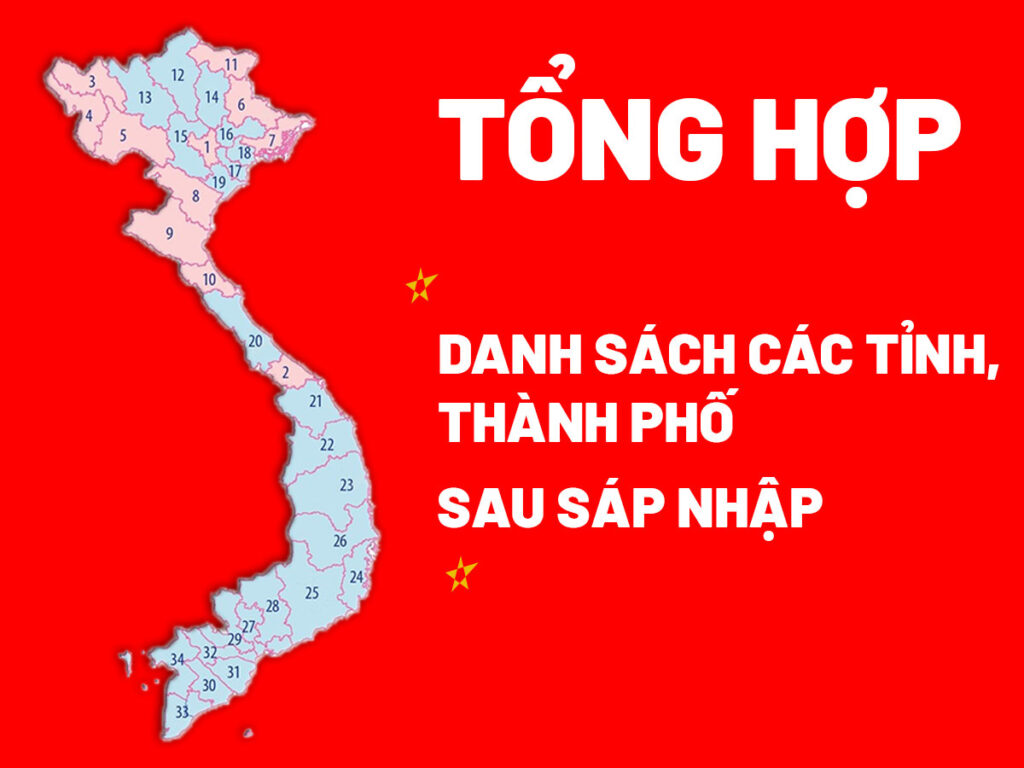
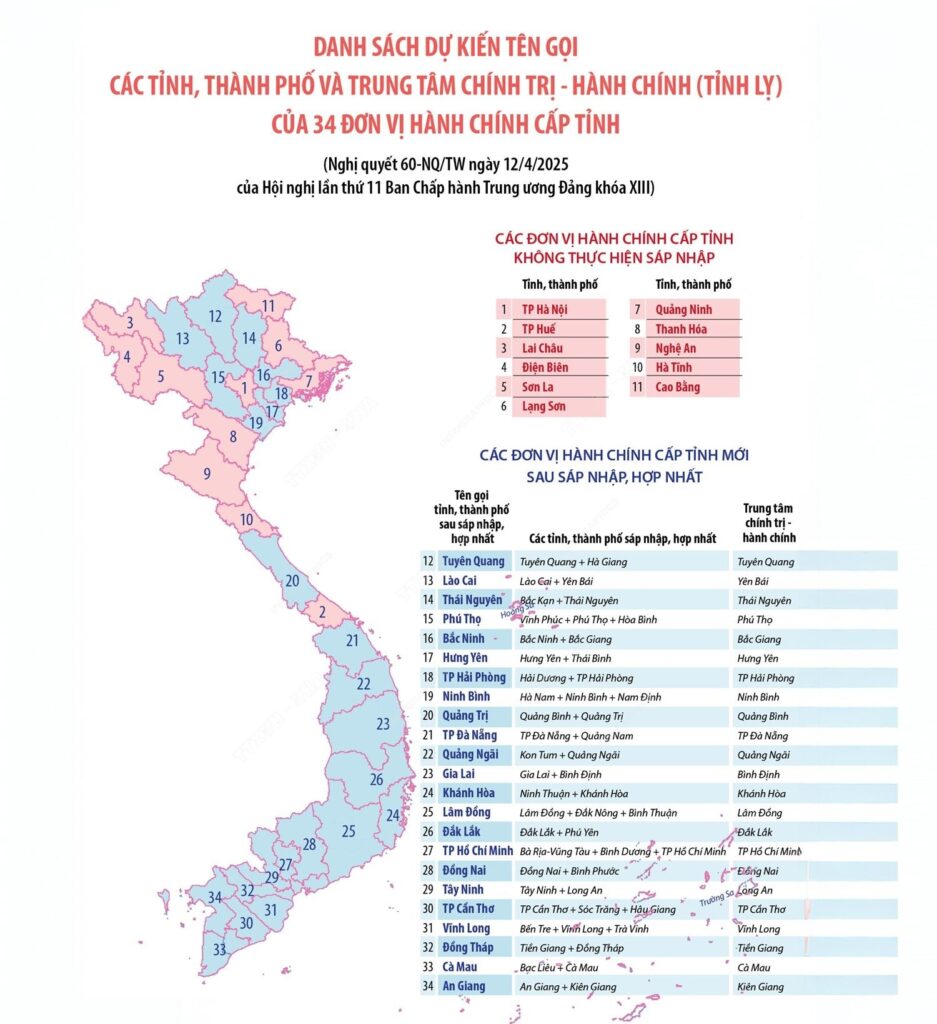
In line with the direction of administrative reform aimed at streamlining the system, improving management efficiency, and promoting economic and social development by 2025, Vietnam will merge a number of provinces and cities. After the merger, the country is expected to have 34 provincial-level administrative units, including 28 provinces and 6 cities directly under the central government.
Mục lục
List of provinces/cities after merger
Serial Number
New unit name
Consolidated entities
Political and administrative center
1
Tuyen Quang Province
Tuyen Quang, Ha Giang
Tuyen Quang
2
Lao Cai Province
Lao Cai, Yen Bai
Yen Bai
3
Thai Nguyen Province
Thai Nguyen, Bac Kan
Thai Nguyen
4
Phu Tho Province
Vinh Phuc, Phu Tho, Hoa Binh
Phu Tho
5
Bac Ninh Province
Bac Ninh, Bac Giang
Bac Giang
6
Hung Yen Province
Hung Yen, Thai Binh
Hung Yen
7
Hai Phong City
Hai Duong, Hai Phong
Hai Phong
8
Ninh Binh Province
Ha Nam, Ninh Binh, Nam Dinh
Ninh Binh
9
Quang Tri Province
Quang Binh, Quang Tri
Quang Binh
10
Da Nang City
Quang Nam, Da Nang
Da Nang
11
Quang Ngai Province
Kon Tum, Quang Ngai
Quang Ngai
12
Gia Lai Province
Gia Lai, Binh Dinh
Binh Dinh
13
Khanh Hoa Province
Ninh Thuan, Khanh Hoa
Khanh Hoa
14
Lam Dong Province
Lam Dong, Dak Nong, Binh Thuan
Lam Dong
15
Dak Lak Province
Dak Lak, Phu Yen
Dak Lak
16
Ho Chi Minh City
BR-VT, Binh Duong, Ho Chi Minh City
Ho Chi Minh City
17
Dong Nai Province
Dong Nai, Binh Phuoc
Dong Nai
18
Tây Ninh Province
Tay Ninh, Long An
Long An
19
Can Tho City
Can Tho, Soc Trang, Hau Giang
Can Tho
20
Vinh Long Province
Ben Tre, Vinh Long, Tra Vinh
Vinh Long
21
Dong Thap Province
Tien Giang, Dong Thap
Tiền Giang
22
Cà Mau Province
Bac Lieu, Ca Mau
Ca Mau
23
An Giang Province
An Giang, Kien Giang
Kien Giang
Provincial-level administrative units are not subject to merger.
1. Hanoi City
5. Son La Province
9. Nghe An Province
2. Hue City
6. Lang Son Province
10. Ha Tinh Province
3. Lai Chau Province
7. Quang Ninh Province
11. Cao Bang Province
4. Dien Bien Province
8. Thanh Hoa Province
Some changes after the merger of provinces and cities
Changes in administrative organization
Reduce the number of provinces: From 63 to 34 provincial-level administrative units.
Merging headquarters and agencies: Departments, committees, and agencies such as the Department of Home Affairs, Department of Finance, Department of Construction, etc., will be merged and restructured, reducing their staffing levels.
Adjusting boundaries: The name of the new province may change, and administrative boundaries will be adjusted to fit the new model.
Establishment of a new administrative center: Some provinces will locate their administrative centers in the old provinces with better conditions (transportation, infrastructure, etc.).
Socio-economic development
Each province after the merger will be larger in scale. This will facilitate planning and attract investment.
Some new provinces may become economic and logistics centers, etc.
Smaller, weaker provinces will have better access to budgets and public investment after the merger.
Changes for the people
Change personal documents: Household registration book, birth certificate, citizen identification card, vehicle registration, etc.
Merging provinces helps concentrate investment in education, healthcare, transportation, etc.